 Crypto Transfer Fees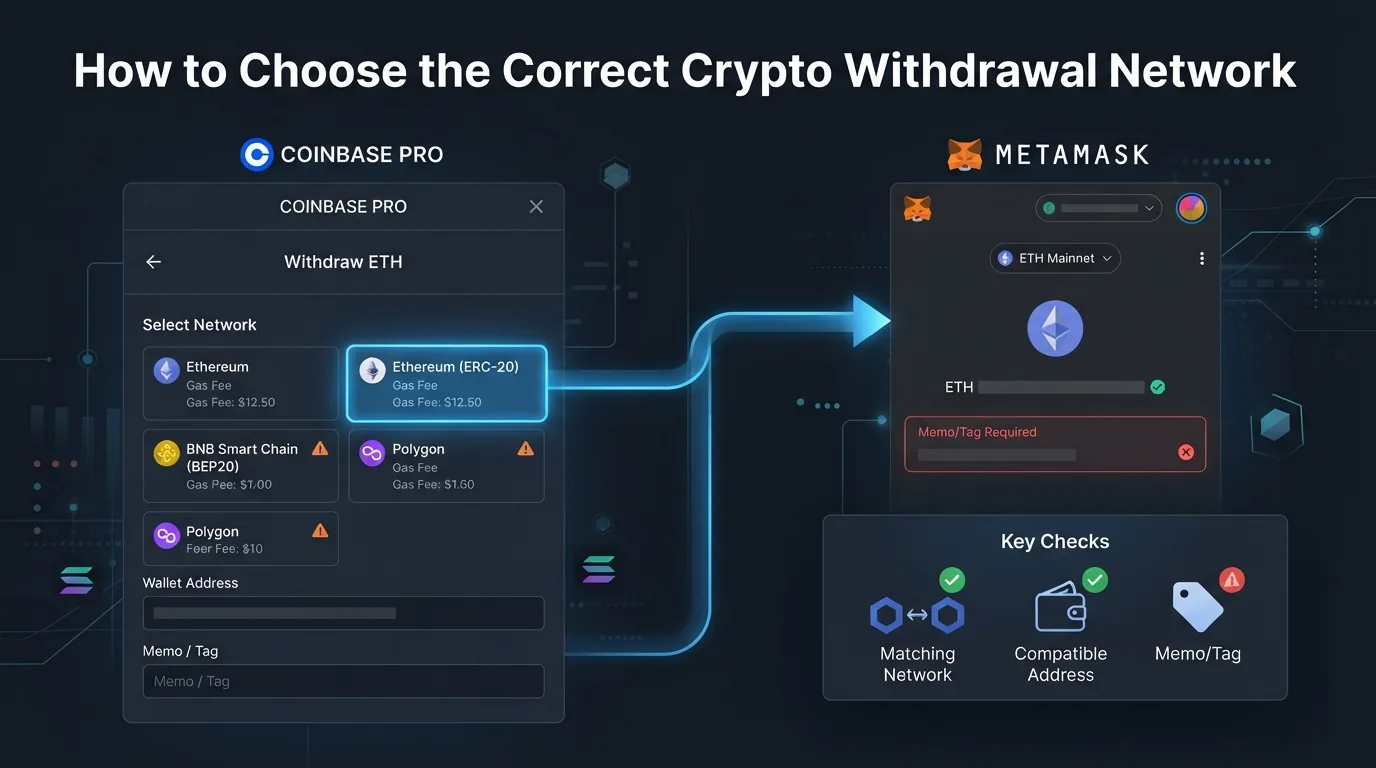
Direct answer: Binance withdrawals should be evaluated from the live withdrawal screen because the withdrawal screen can offer several networks for the same asset, each with its own fee and minimum. The displayed charge can change over time and may not equal the raw network fee.
Understand the route first
Binance withdrawals should be evaluated from the live withdrawal screen because the withdrawal screen can offer several networks for the same asset, each with its own fee and minimum. The displayed charge can change over time and may not equal the raw network fee.
Before confirming on Binance, verify network selection, withdrawal fee, minimum withdrawal, receiving support and memo/tag requirements. For practical transfers, the first question is not simply 'which option is cheapest?' but 'which supported route produces the right balance of compatibility, cost and confirmation behavior?'
Where the cost comes from
The mechanics behind Binance withdrawal fees explained are easiest to understand by breaking the transfer into separate decisions. First identify the blockchain that will process the transaction. Then identify the resource that chain prices, such as transaction data, computational gas, signatures, account resources or a Layer 2 data component. Finally, identify who is quoting the fee. A self-custody wallet is usually estimating a direct network charge, while an exchange can present a withdrawal charge created by its own policy. This applies to Binance withdrawal fees explained.
For this topic, the most useful concepts to keep in view are network selection, withdrawal fee, minimum withdrawal, and receiving support and memo/tag requirements. These are not interchangeable labels. One describes what the chain consumes, another may describe user-selected urgency, and another can describe a platform rule. Keeping those layers separate prevents the common mistake of comparing two numbers that were calculated for different purposes or different network routes. This applies to Binance withdrawal fees explained.
Variables that move the fee
The displayed cost can change even when the asset and destination remain the same. Network demand can move, wallet estimates can refresh, a platform can update its fee schedule, or the selected network can change the transaction type entirely. That means an old screenshot or a fixed number from a previous transfer is not a dependable quote for a new transfer. The final confirmation screen is more relevant because it reflects the route and settings you are actually about to use. This applies to Binance withdrawal fees explained.
Transaction value also does not always drive fee size in the intuitive way users expect. Many blockchains price the work needed to process a transaction rather than the market value being carried. A larger token amount can therefore use roughly the same execution path as a smaller token amount. What matters more is whether the transaction is simple or complex, how much data or computation it uses, and how crowded the network is at that moment. This applies to Binance withdrawal fees explained.
Five concepts worth checking
Network Selection deserves separate attention because it can change how a transfer should be interpreted. In the context of Binance Crypto Withdrawal Fees Explained: Coin and Network Selection, do not treat it as an isolated statistic. Relate it to the selected network, the transaction type and the receiving platform. If the service changes one of those inputs, the fee outcome or operational requirement can change as well. This is why a transfer preview should be read as a complete set of instructions rather than as a single fee number. This applies to Binance withdrawal fees explained.
Withdrawal Fee deserves separate attention because it can change how a transfer should be interpreted. In the context of Binance Crypto Withdrawal Fees Explained: Coin and Network Selection, do not treat it as an isolated statistic. Relate it to the selected network, the transaction type and the receiving platform. If the service changes one of those inputs, the fee outcome or operational requirement can change as well. This is why a transfer preview should be read as a complete set of instructions rather than as a single fee number. This applies to Binance withdrawal fees explained.
Minimum Withdrawal deserves separate attention because it can change how a transfer should be interpreted. In the context of Binance Crypto Withdrawal Fees Explained: Coin and Network Selection, do not treat it as an isolated statistic. Relate it to the selected network, the transaction type and the receiving platform. If the service changes one of those inputs, the fee outcome or operational requirement can change as well. This is why a transfer preview should be read as a complete set of instructions rather than as a single fee number. This applies to Binance withdrawal fees explained.
Example: reading a transfer preview
Imagine you are preparing a transfer specifically related to “Binance Crypto Withdrawal Fees Explained: Coin and Network Selection”. Open the destination first and confirm the exact supported network. Next, return to the sending wallet or exchange and choose that same route. Read the fee, minimum, amount-received estimate and any memo or tag requirement as one package. If the interface offers several networks, do not compare their fees until unsupported routes are removed from consideration. This order turns fee shopping into a compatibility-safe decision instead of a race to the smallest number. This applies to Binance withdrawal fees explained.
A second useful check is to ask what you will need after the funds arrive. If you are receiving a token into self-custody, the next outgoing transaction may require the network’s native gas asset. A route can look inexpensive at withdrawal time but become inconvenient if the wallet receives only the token and no gas asset. For exchange-to-exchange transfers, the next concern is different: minimum deposits, crediting rules and account identifiers can matter more than future gas availability. This applies to Binance withdrawal fees explained.
Blockchain fee versus platform display
Wallets and exchanges can legitimately show different numbers for what appears to be the same transfer. A wallet usually builds a transaction for your address and estimates the network cost from current conditions. An exchange can aggregate customer withdrawals, batch transactions, subsidize part of the cost or charge a schedule that is intentionally more stable than the underlying network. Neither display should be interpreted without first understanding whether it is a raw network estimate or a platform withdrawal charge. This applies to Binance withdrawal fees explained.
This distinction is especially important when users compare a block explorer fee with an exchange withdrawal screen. The block explorer describes on-chain activity, while the exchange controls its customer-facing fee. A difference between the two does not automatically mean an error. The useful question is whether the exchange clearly shows the charge before confirmation and whether a different supported route would produce a better final amount received. This applies to Binance withdrawal fees explained.
Compatibility and receiving requirements
Compatibility should be checked before cost because an incompatible transfer can create a recovery problem. The sending asset, selected network, receiving asset and receiving network must all describe the same route. Token tickers can be misleading: the same symbol may exist as separate token contracts on several chains. Address formats can also overlap, particularly across EVM-compatible networks, so a visually valid address is not proof that the destination supports the selected chain. This applies to Binance withdrawal fees explained.
Read the deposit instructions on the receiving side for extra fields. XRP-style destination tags, Stellar memos and exchange-specific identifiers can be required even when the address itself is correct. For stablecoins, confirm whether the platform labels the route by network name, token standard or both. If any part of the route is unclear, stop before sending and use the platform’s own deposit and withdrawal interfaces to reconcile the network names. This applies to Binance withdrawal fees explained.
Where users go wrong
The most expensive mistakes are usually operational rather than mathematical. Users sometimes select a network because its fee is low without checking destination support, assume a similar-looking address makes two networks compatible, send an entire balance without leaving native gas for later, or forget a memo or destination tag. Another mistake is comparing fees from different moments and assuming the cheaper historical route will still be cheaper now. A careful transfer process removes these failure points before cost optimization begins. This applies to Binance withdrawal fees explained.
It also helps to distinguish a network problem from a platform problem. A transaction can confirm successfully on-chain while an exchange deposit remains pending because the exchange needs additional confirmations or cannot automatically match the deposit to an account. Conversely, a withdrawal can remain pending inside an exchange before any on-chain transaction exists. Learning to separate those stages makes troubleshooting more precise. For a related same-category guide, read Exchange-to-Wallet Crypto Transfers: Which Fees Do You Actually Pay?. This applies to Binance withdrawal fees explained.
How to compare options fairly
A fair comparison uses the same asset, similar transfer intent and only networks that both endpoints support. Record the fee shown by each route, the amount the recipient is expected to receive, the required gas asset and any minimum. Then consider speed and operational friction. A route that saves a small fee but requires a bridge, an extra swap or a second transfer may be more expensive in practice than a slightly higher direct withdrawal that lands on the network you actually need. This applies to Binance withdrawal fees explained.
For frequent transfers, create a small personal checklist rather than memorizing one ‘best’ network. Network conditions and exchange schedules change, but the decision process stays useful: verify support, understand the fee model, inspect the live quote, confirm the recipient details and consider what happens after arrival. This process is more durable than any static table claiming one network is always cheapest. This applies to Binance withdrawal fees explained.
Short FAQ
Does Binance withdrawal fees explained have one fixed answer? No. The underlying rule may be stable, but the numeric fee can change with network conditions, platform policy, transaction structure or route selection.
For Binance withdrawal fees explained, is the lowest displayed fee always the best choice? No. A route must be supported by the receiver, use the correct asset and network, and satisfy any memo, minimum or address requirements.
When researching Binance withdrawal fees explained, should you trust a fee quoted in an article as a live price? Use articles to understand the mechanics, then verify the actual fee in the wallet or exchange confirmation screen immediately before sending.
A disciplined send checklist
Before confirming a transfer, re-read the asset name, network name, destination address and any memo or tag. Verify the fee and the amount expected to arrive. If you are using self-custody, keep enough native gas asset for any follow-up transaction. If you are withdrawing from an exchange, review the minimum and the platform’s final confirmation summary. These checks take less time than recovery and remain useful regardless of how fee markets evolve. This applies to Binance withdrawal fees explained.
The core lesson from binance withdrawal fees is to treat fee comparison as part of route selection, not as a separate shopping exercise. Understand what creates the charge, compare only compatible options, and use the current transaction preview as the final numeric reference. That approach helps you avoid both unnecessary fees and the much larger cost of a transfer sent over the wrong network. This applies to Binance withdrawal fees explained.